Odorous house ants (Tapinoma sessile) commonly invade homes while searching for sweet foods and moisture. Many homeowners first notice them when tiny ants begin appearing on kitchen counters, near sinks, or around sugary foods.
Workers are usually brown to dark brown or black and are known for the strong odor they release when crushed.
Odorous house ants are small ants that grow to about 1/16 to 1/8 inch long. Their color ranges from brown to dark brown or black.
Like all ants, they have:
When viewed from the side, their thorax has a slightly uneven shape, which helps distinguish them from some other small household ants.
One of the easiest ways to identify odorous house ants is by their odor when crushed. The odor is commonly described as rotten coconut, which is how these ants earned their name.

Odorous house ants are most active during warm months, when colonies expand and food sources are plentiful.
Activity typically increases during spring and continues through summer. Rainy weather can also trigger indoor activity when outdoor nests become wet or disturbed.
In heated buildings, odorous house ants may remain active indoors year-round.
Odorous house ants form large colonies and visible foraging trails. When they enter a home, you may notice:
These ants travel in organized trails between food sources and their nesting sites. Even if visible ants are removed, more may appear if the colony remains nearby.
Odorous house ants prefer moist environments and may nest both outdoors and inside structures.
Outside, these ants commonly nest in protected areas such as:
Colonies may also develop in structural voids near the exterior of buildings.
When conditions allow, odorous house ants may establish nests indoors. Indoor nesting sites often include:
These ants frequently relocate their nests, especially after rain or environmental changes.
Odorous house ants usually enter homes while searching for food, moisture, or shelter.
Ants often follow scent trails that lead to crumbs, spills, or uncovered foods in kitchens and pantries.
Leaky pipes, condensation around appliances, and damp areas under sinks can attract these ants.
Heavy rain or sudden temperature changes can disturb outdoor nests and cause ants to relocate indoors.
Odorous house ants primarily feed on sweet substances. It’s no wonder they’re sometimes called sugar ants.
Outdoors, they commonly collect honeydew, a sugary liquid produced by aphids and other plant-feeding insects.
Inside homes, they may feed on:
They may also consume greasy or protein-based foods.
Odorous house ants are considered nuisance pests. They do not bite or sting and are not known to cause structural damage to homes.
However, they can contaminate food and food preparation surfaces while foraging. Any food items that ants have entered should be discarded.
Because of their small size, odorous house ants can enter homes through very small openings.
Common entry points include:
Once ants locate food, they leave scent trails that guide other ants to the same source.
A few simple steps can help reduce the chances of an infestation:
Reducing moisture and eliminating food sources can make your home less attractive to ants.
Odorous house ant infestations can be difficult to eliminate because their colonies often contain multiple nesting locations. These ants frequently relocate their nests and may divide into several groups, allowing infestations to spread and return even after visible ants are removed.
Successful control requires identifying where ants are nesting and treating the colony rather than just the ants that appear indoors.
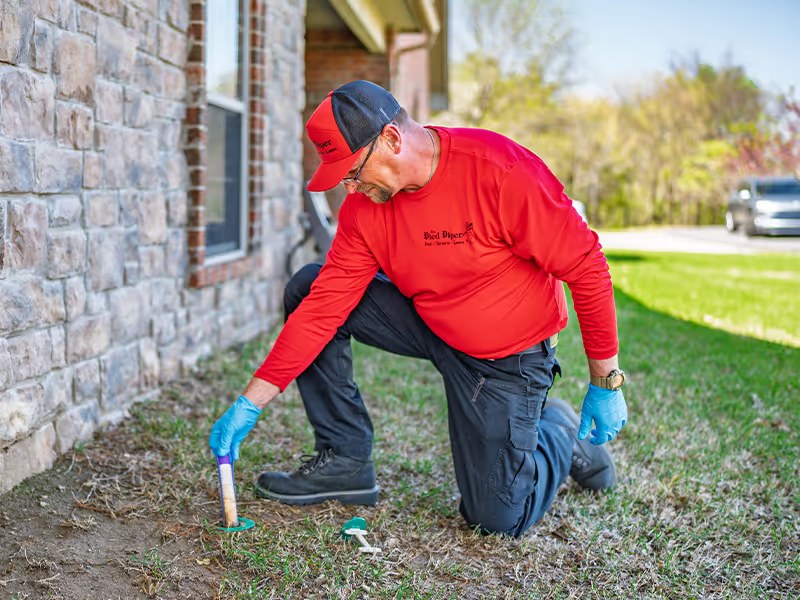
Through our residential pest control services, we help homeowners eliminate odorous house ant infestations and prevent them from returning. Our technicians inspect the home and surrounding areas to locate nesting sites, identify how ants are entering the structure, and apply targeted treatments designed to eliminate the colony.
In addition to eliminating the current infestation, our ongoing pest control services help prevent odorous house ants and other common household pests from returning.
If you’re dealing with odorous house ants in your kitchen, bathroom, or other areas of your home, The Pied Piper can help eliminate the problem and help keep your home protected.
For help resolving your ant problem, call (888) 737-8943 or find the nearest Piper to get started!
Ant colonies can grow quickly during warm weather. When a food source is discovered, ants leave scent trails that guide other workers to the same location, making it seem as though ants suddenly appear all at once.
Heavy rain can flood or disturb outdoor nests. When this happens, ants may relocate to drier areas such as foundations, wall voids, or sheltered spaces inside homes.
Kitchens and bathrooms provide the two things these ants are attracted to most: food and moisture.
Odorous house ants frequently relocate their nests or split their colonies into multiple groups, which can make infestations appear to disappear temporarily before returning.
Odorous house ants leave scent trails that guide other workers to food and water sources, causing ants to repeatedly travel the same paths.

We’ve used Pied Piper Pest Control for over two years. We highly recommend them. Every technician is highly trained and very professional. We are out in the country and our young grandchildren visit frequently. We never worry about wasps, hornets, spiders, scorpions or mice thanks to the thorough and effective service we receive from Piper Pest Control. Their team answers all our questions and is consistently great at communicating with us. Thank you for your profession demeanor and great service!
Stacey H.
Eufaula, OK

Great experience with Pied Piper! The technician Ben was very knowledgeable about all aspects of pest control. Very professional appearance and service to boot! Ben answered any questions I had and was very thorough with inspection and application. Would highly recommend. Ditch the rest and get with the best!
Kevin N.
Azle, TX

Brad was excellent very professional and efficient! He went to the root of the problem and addressed it appropriately as needed. The service ladies you call for scheduling are also very polite and friendly . All around 10 on 10 ! Their products actually work too unlike others we’ve used in the past.
Lisa N.
Eufaula, OK


Helpful Tips & Info